
The A-Z of UX Design
Over the last 15 years, I’ve learned a lot. Here’s an A-Z of the most valuable lessons that have helped me get to where I am. Take these principles to heart and I guarantee you’ll become an even better designer.

Ambiguity
Unclear information creates discomfort

Bias
Legacy neural pathways that make poor decisions

Conformity
Familiar patterns (Jacobs Law)

Dark Patterns
Exploiting bias to encourage undesirable behaviour
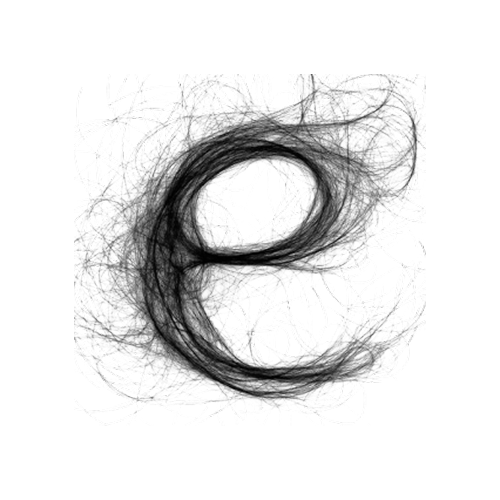
Effervescence
Shared collective excitement unifies social groups
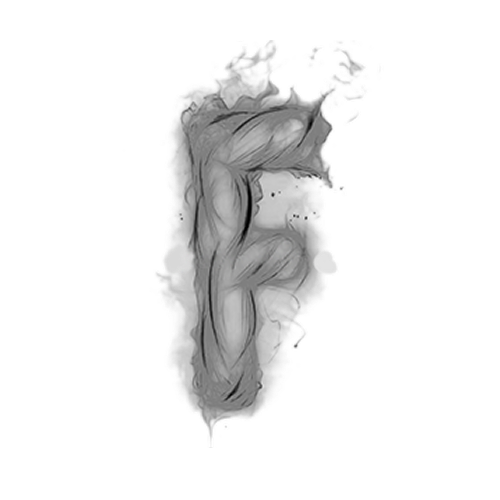
Friction
Design elements that hinder optimal flow

Gestalt
The space between objects is also symbolic

Hick’s Law
The more options, the harder the decision

Information Scent
Traces of content entice users on a journey

Jakob’s Law
Design using familiar practices helps adoption
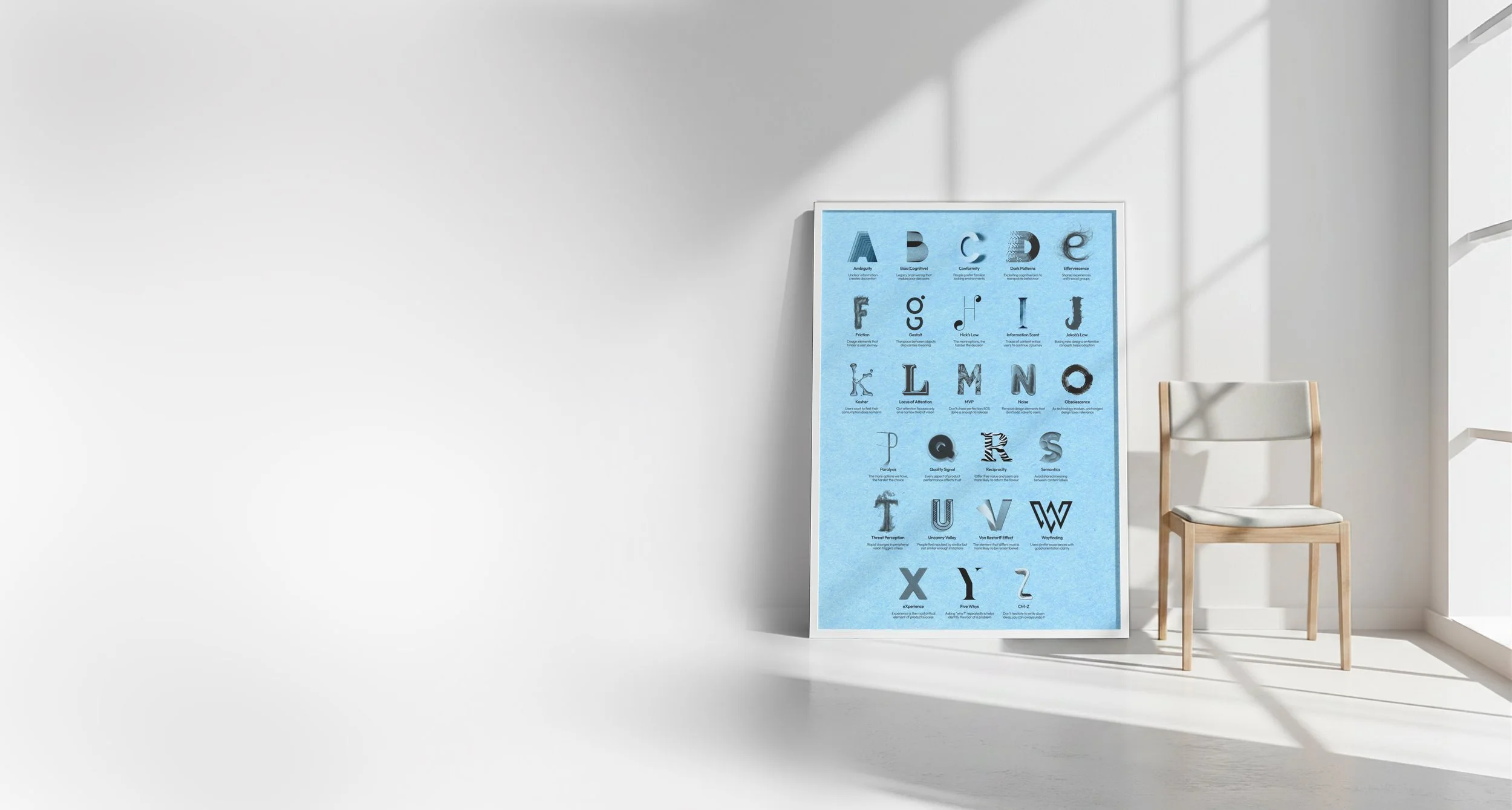
Order this as a poster
The 26 most valuable principles of design, carefully curated from 15 years in world-leading design companies.
Printed on 640×970mm 270gsm paper by GF Smith. Available in Blue, Pink, Cream or a custom colour scheme.
Delivered to your door.
From £40.00 + P&P

Obsolescence
Remove features that no longer add value
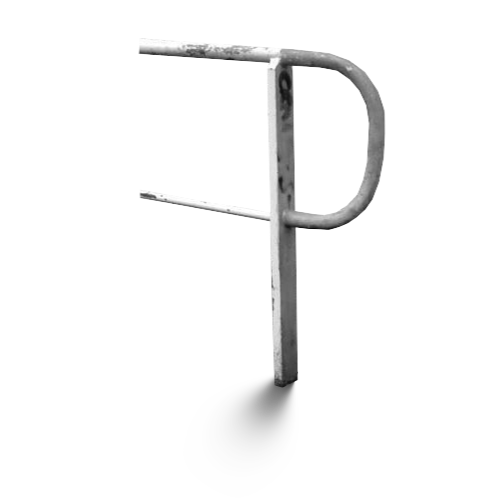
Paralysis
Being faced with too many choices prevents decisions

Quality Signal
Every aspect of your product’s performance affects perceived trust

Reciprocity
Offer free value and users are more likely to return the favour

Semantic Crossover
Avoid shared meaning between content labels
Threat Perception
Rapid changes in peripheral vision triggers stress

Kosher
Users must feel that their product consumption does no harm
Locus of Attention
Our attention focuses only on a narrow field of vision


MVP
Done is better than perfect
Noise
Elements that don’t add value to a user’s objective


Uncanny Valley
People feel repulsed by similar but not similar enough imitations
Von Restorff Effect
The element that differs most is more likely to be remembered


Wayfinding
Users like to know where they are in a journey
eXperience
Nothing is more important to success than delivering a good experience


Five Whys
A way to identify the root of a problem by asking "why?" repeatedly
Ctrl-Z
Don’t think twice about drawing ideas; you can aways undo it